
Technology is becoming less noticeable in everyday life because many of the biggest changes are happening quietly in the background. Phones are becoming more useful, homes are becoming more connected, cars are gaining smarter features, and digital services are increasingly able to understand what people need.
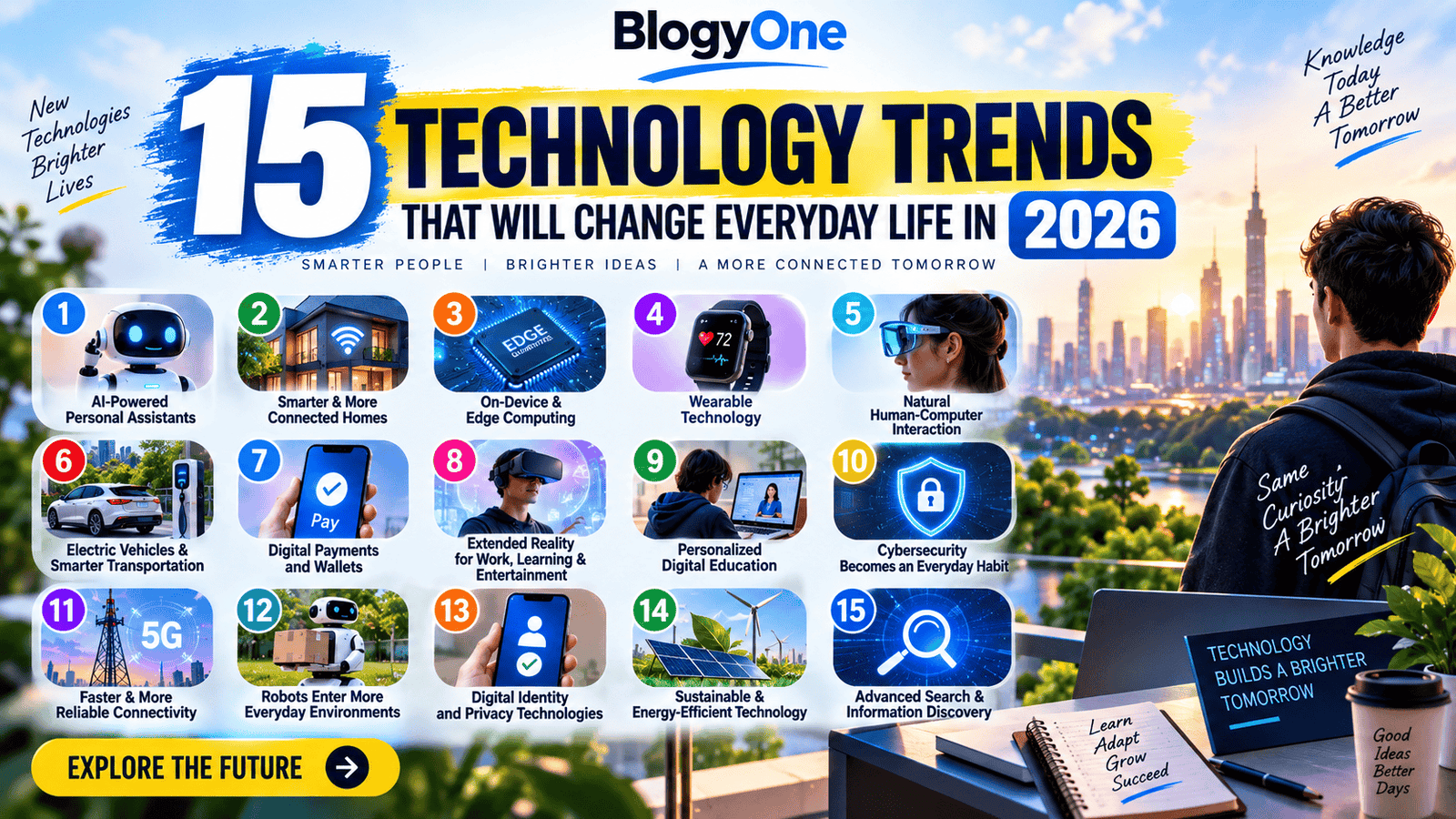
The 15 technology trends that will change everyday life in 2026 are not limited to futuristic gadgets. Many are practical developments already influencing how people work, communicate, shop, travel, study, manage money, and protect their personal information.
Some technologies will become mainstream quickly, while others will develop more gradually. The important point is understanding what these changes actually mean for ordinary people.
1. AI-Powered Personal Assistants
Digital assistants are moving beyond simple voice commands and basic searches. Increasingly capable software can help users organize information, summarize documents, plan tasks, draft messages, manage schedules, and interact with other digital services.
The major shift is from asking a device to perform one command toward giving it a broader goal. For example, instead of setting several reminders manually, a user may be able to explain a plan and receive help organizing the individual steps.
This could make everyday digital tasks faster, particularly for students, professionals, business owners, and people who regularly handle large amounts of information.
However, users still need to review important results. Automated systems can misunderstand instructions or provide incorrect information, so human judgment remains essential.
2. Smarter and More Connected Homes
Smart-home technology is becoming more practical as connected devices become easier to manage. Lights, thermostats, security cameras, appliances, door locks, and entertainment systems can communicate through a connected home environment.
The real benefit is convenience. A homeowner could automate lighting based on schedules, receive a notification about an unusual security event, or manage appliances remotely.
Energy management is another important area. Connected devices can help households understand when and where electricity is being used, potentially making it easier to reduce unnecessary consumption.
The challenge is that adding more connected devices also creates more accounts, software updates, and privacy considerations. Consumers should choose products from reputable manufacturers and keep devices updated.
3. On-Device and Edge Computing
Not every digital task needs to send information to a distant data center. Edge computing processes certain information closer to where it is generated, while modern devices are increasingly capable of performing sophisticated tasks locally.
This can reduce dependence on a constant internet connection and may improve responsiveness. It is particularly useful for smartphones, cameras, vehicles, industrial equipment, and other devices that need to react quickly.
For consumers, the change may be almost invisible. Apps and devices can simply feel faster and more responsive without users needing to understand where the processing occurs.
4. Wearable Technology Becomes More Useful
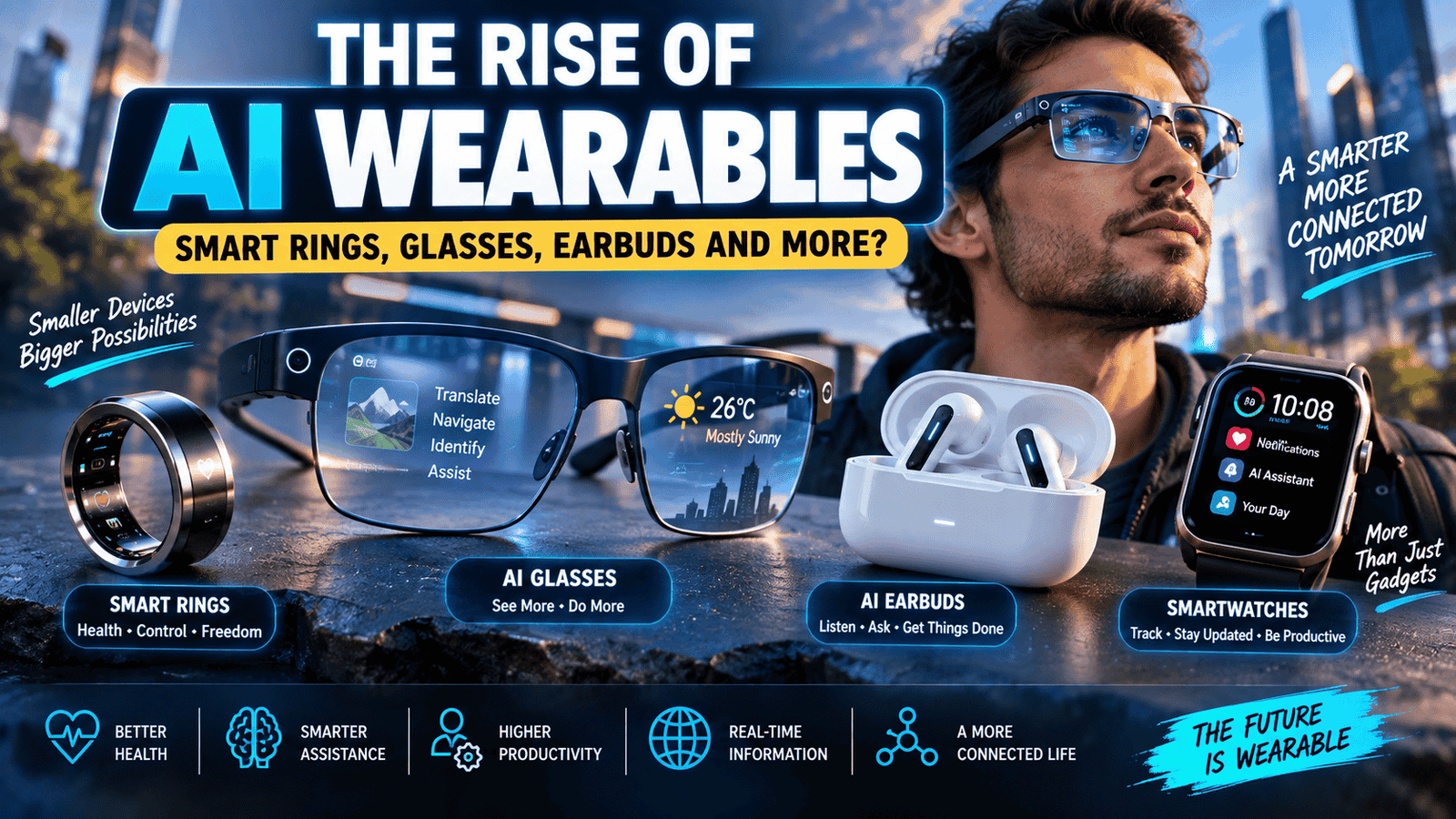
Smartwatches, fitness trackers, smart rings, and other wearable devices are evolving beyond counting steps and displaying notifications.
Modern wearables can provide information about activity, sleep patterns, heart rate, workouts, and other aspects of daily routines, depending on the device and its capabilities.
The growing value of wearables comes from continuous information rather than occasional measurements. Users can identify patterns over time and make better-informed lifestyle decisions.
At the same time, health-related readings from consumer devices should not automatically be treated as medical diagnoses. Their accuracy and usefulness vary by device, measurement, and situation.
5. More Natural Human-Computer Interaction
Interacting with technology is becoming less dependent on complicated menus and rigid commands. Voice, cameras, gestures, natural-language interfaces, and multimodal systems are making digital interaction more intuitive.
A person may increasingly be able to speak naturally, show a device an object through a camera, or combine text and images when explaining what they need.
This trend could be particularly valuable for accessibility. People who find traditional keyboards, menus, or small screens difficult to use may benefit from alternative ways of controlling technology.
The result is a gradual move toward technology adapting to people rather than requiring people to learn complicated interfaces.
6. Electric Vehicles and Smarter Transportation
Electric vehicles are becoming an increasingly visible part of transportation. Improvements in batteries, charging infrastructure, software, and vehicle efficiency are helping expand the range of available electric transportation options.
The impact goes beyond replacing a petrol or diesel engine. Electric vehicles can integrate sophisticated software, connected services, navigation, driver-assistance features, and energy-management systems.
Cities are also exploring smarter transportation systems, including connected traffic infrastructure, improved public transit information, and more efficient route planning.
Adoption will still vary significantly by country and region because charging availability, vehicle prices, electricity infrastructure, and local policies differ.
7. Digital Payments and Wallets
Cash is no longer the only convenient way to pay for everyday purchases. Mobile wallets, contactless payments, instant transfers, and digital banking services are becoming increasingly integrated into daily transactions.
A smartphone can function as a payment method, ticket holder, loyalty card, identification tool, and banking interface.
Digital payments can make transactions faster and easier to track. They can also help online businesses serve customers without requiring traditional cash-based processes.
Security remains important. Users should protect devices with strong authentication, avoid sharing one-time verification codes, and be cautious when responding to unexpected payment requests.
8. Extended Reality for Work, Learning and Entertainment
Virtual reality, augmented reality, and mixed-reality technologies are gradually moving beyond gaming.
Students can potentially explore three-dimensional environments, workers can receive immersive training, designers can visualize objects before manufacturing them, and consumers can preview certain products or spaces digitally.
Augmented reality is particularly interesting because it adds digital information to the physical environment instead of completely replacing it.
The technology still faces challenges, including hardware costs, comfort, battery life, limited content, and the need for practical applications that justify regular use.
9. Personalized Digital Education
Education technology is becoming more capable of adapting learning experiences to individual students.
Digital platforms can organize lessons, provide practice questions, identify areas where a learner struggles, and adjust the difficulty of exercises. This does not mean traditional teachers will become unnecessary. Instead, technology can handle some repetitive tasks while educators concentrate more on explanation, feedback, and student development.
For independent learners, personalized educational tools may make it easier to study at a suitable pace.
The quality of the underlying educational content remains critical. A personalized system is only useful when the information and explanations it provides are reliable.
10. Cybersecurity Becomes an Everyday Habit
As more aspects of life move online, cybersecurity is no longer just an issue for large companies and technology professionals.
Ordinary users increasingly need to protect email accounts, social media profiles, banking services, cloud files, and connected devices.
Security practices such as multi-factor authentication, password managers, software updates, device locks, and careful handling of suspicious messages are becoming basic digital hygiene.
Another important development is stronger security built directly into devices and online services. Ideally, users will not have to understand every technical detail to receive reasonable protection.
Still, technology cannot eliminate every risk. Social engineering and scams often target human behavior rather than technical weaknesses.
11. Faster and More Reliable Connectivity
Connectivity continues to influence how people communicate and access services. Advances in mobile networks, fiber infrastructure, Wi-Fi technology, and satellite connectivity are helping bring reliable internet access to more locations.
For everyday users, better connectivity means smoother video calls, faster downloads, more reliable online learning, cloud applications that respond quickly, and connected devices that work more consistently.
The biggest benefit may be less visible: businesses and public services can increasingly operate digitally without requiring users to be physically present.
Access and affordability will remain important challenges, particularly in areas where infrastructure development is limited.
12. Robots Enter More Everyday Environments
Robotics is gradually expanding beyond factories and specialized laboratories.
Delivery robots, warehouse automation, cleaning machines, agricultural robots, and other automated systems are becoming more capable of handling specific physical tasks.
At home, robotic vacuum cleaners and similar products already demonstrate the basic idea: a machine performs a repetitive task while the person spends time elsewhere.
The next stage is likely to involve more capable systems designed for particular environments rather than a single general-purpose robot that can do everything.
Cost, reliability, safety, and maintenance will determine how quickly these technologies become common.
13. Digital Identity and Privacy Technologies
As people use more online services, proving who they are securely is becoming increasingly important.
Digital identity systems can allow users to verify their identity electronically rather than repeatedly submitting physical documents. In some settings, digital credentials may also allow people to share specific information without exposing unnecessary personal details.
This could simplify activities such as accessing services, signing documents, opening accounts, or verifying eligibility.
Privacy is the major consideration. Convenient digital identity systems must be designed carefully because centralized or poorly protected identity information can create serious risks if compromised.
14. Sustainable and Energy-Efficient Technology
Environmental concerns are influencing the design of new technology. Manufacturers are working toward more efficient devices, renewable-energy integration, improved batteries, smarter electricity management, and longer-lasting hardware.
Smart energy systems can help households monitor consumption, while connected equipment can automatically adjust certain operations based on usage patterns.
Consumers are also paying more attention to repairability, durability, energy efficiency, and electronic waste.
Technology alone will not solve environmental problems, but better-designed products and more efficient systems can reduce waste and improve how resources are used.
15. Advanced Search and Information Discovery
The way people find information online is changing. Search is becoming more conversational and increasingly capable of combining different types of information.
Instead of entering several disconnected searches, users can describe a problem in ordinary language and refine the request through follow-up questions.
This can make research more convenient, but it also creates a new responsibility: knowing how to evaluate information.
When important decisions depend on an online answer, users should consider the credibility of the source, check important facts, and distinguish between established information and opinion.
The ability to find information quickly is valuable, but the ability to judge information correctly is becoming equally important.
What These Technology Trends Mean for Everyday Life
The most significant change in 2026 may not be a single revolutionary device. It is the growing connection between technologies that previously operated separately.
A smartphone can connect to a watch, car, payment system, home appliances, cloud services, and other devices. Digital services can share information across different parts of a person's routine. Automation can reduce repetitive work, while better connectivity makes remote services more practical.
This creates clear advantages: convenience, accessibility, personalization, efficiency, and faster access to information.
There are also trade-offs. More connected technology can mean more personal data being collected. Greater automation can create dependence on software. Digital services can make life easier while also increasing the consequences of account theft or system failures.
For that reason, becoming technologically capable does not mean buying every new device. It means understanding which technologies genuinely solve a problem and using them responsibly.
How to Prepare for the Technology Changes of 2026
You do not need to become a technology expert to benefit from these developments. A few practical habits can make a significant difference.
First, keep your important devices and applications updated. Security improvements often arrive through routine software updates.
Second, strengthen your online accounts with unique passwords and multi-factor authentication wherever available.
Third, learn to evaluate digital information instead of automatically trusting the first result you see.
Fourth, consider privacy before connecting a new device to your home or personal accounts. Understand what information it collects and which permissions it requires.
Finally, focus on useful technology rather than technology for its own sake. A tool that saves time, improves accessibility, reduces repetitive work, or solves a genuine problem is more valuable than a device simply because it is new.
Frequently Asked Questions
What is the biggest technology trend in 2026?
There is no single technology that will affect everyone in exactly the same way. AI-powered software, connected devices, cybersecurity, digital payments, advanced connectivity, and automation are among the developments with broad everyday applications.
Will technology replace human workers?
Some tasks will become increasingly automated, particularly repetitive digital and physical tasks. However, many jobs involve judgment, communication, creativity, responsibility, interpersonal relationships, and physical work that cannot simply be reduced to automation. The impact will vary considerably between industries and occupations.
How will technology affect students in 2026?
Students can benefit from personalized learning tools, digital educational resources, improved collaboration platforms, and faster access to information. At the same time, they need strong research and critical-thinking skills to distinguish reliable information from inaccurate material.
Are smart-home devices safe?
Smart-home devices can be useful, but security depends on the product, software, configuration, and user's security practices. Strong passwords, multi-factor authentication where available, regular updates, and careful privacy settings can reduce common risks.
Do I need to adopt every new technology?
No. Technology should serve a practical purpose. Consumers should consider usefulness, cost, privacy, security, reliability, and long-term support before adopting a new product or service.
Conclusion
The 15 technology trends that will change everyday life in 2026 point toward a world where digital technology becomes more integrated into ordinary activities rather than remaining something people consciously switch on and off.
Smarter software, connected homes, wearable devices, electric transportation, digital payments, advanced connectivity, robotics, personalized education, and stronger cybersecurity are all shaping different parts of daily life.
The best approach is neither to resist every new development nor to accept every new technology without question. Stay curious, protect your personal information, verify important information, and adopt tools that provide genuine value.
Technology will continue to evolve, but the people who benefit most from it will be those who understand both its possibilities and its limitations.
Comments (0)
No comments yet. Be the first to share your thoughts!
Join the Conversation
Share your perspective, ask questions, and connect with other readers on this story.